


---Interview with H. E. Mr. Nyamaa Enkhbold, Ambassador of Mongolia to the People's Republic of China
VICTWO: How would Your Excellency evaluate bilateral relations between China and Mongolia?
AMBASSADOR: The long-term sustainable development of friendly relations and mutually beneficial cooperation with China is the priority of Mongolia's foreign policy, and the parties have consistently followed the principle of respecting each other's independence, sovereignty, territorial integrity, and their respective development paths.
I am happy that the political trust of both sides and the mutual understanding of the people have increased, and the actual cooperation between the two countries has made great progress, and relations are developing successfully in all fields.
Many good stories can be mentioned about the achievements of the 76-year relationship with China, but what should be emphasized is that our two countries always supported each other in times of difficulties. The latest example of which is how we helped each other and overcame the pandemic, which was unprecedented challenge for mankind.
At a time when all world movements were almost at a standstill, the visit of the President of Mongolia to China and his expression of solidarity was an event that added a new tone to the relations between the two neighbours. Even the phrase "Tea in return for sheep" appeared, and mutual assistance with warmth has become a role model for relations and cooperation between neighbours. We are now working closely together to make up for lost time and opportunities and to revitalize the growth.
Lately, mutual visits and meetings at all levels of the two sides have become regular, thus becoming an important impetus for the development of relations. For example, in the less than a year period after the last parliamentary elections important high-level events took place, the Chinese Vice President Han Zheng paid a friendly visit to Mongolia and Prime minister of Mongolia visited China 5 times on different occasions. In the future, we are eager to enrich relations with newer contents and make real, tangible progress.
Mongolia and China are friendly partners that value modern open relations and have a lot of space for cooperation. Though different in terms of size and potential of our economies, our cooperation is harmonious, mutually beneficial, complementary. In the future, it is important to cooperate in an open and transparent manner without any doubt in mutual trust in sincerity of our attitude to each other.
VICTWO: Why is Mongolia a good investment destination?
AMBASSADOR: Mongolia offers a compelling investment proposition due to its strategic location, abundant natural resources, and ambitious development agenda. Situated between China and Russia, Mongolia serves as a vital gateway for trade and investment in Northeast Asia. Its geographic position connects major markets and trade corridors, offering enterprises an opportunity to expand their regional footprint.
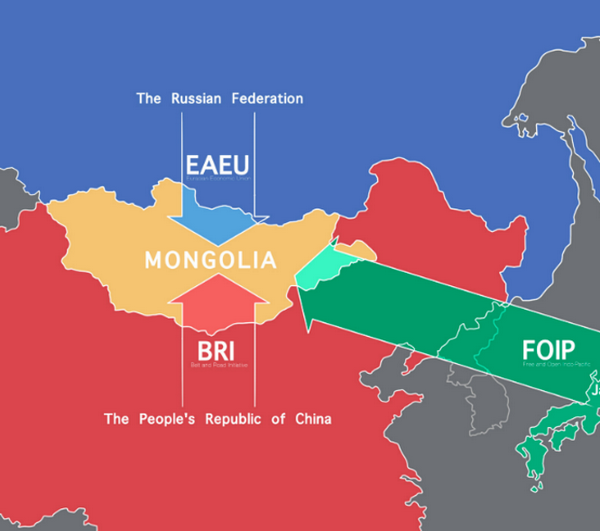
The country is endowed with vast mineral wealth, including 1,170 proven deposits across more than 8,000 mineral sites, featuring over 80 types of minerals and metals. Key resources such as copper, gold, coal, uranium, and rare earth elements present strong potential for development. As exploration advances, the discovery of super-large deposits continues, creating significant opportunities for investment in mining, processing technologies, and value-added production.
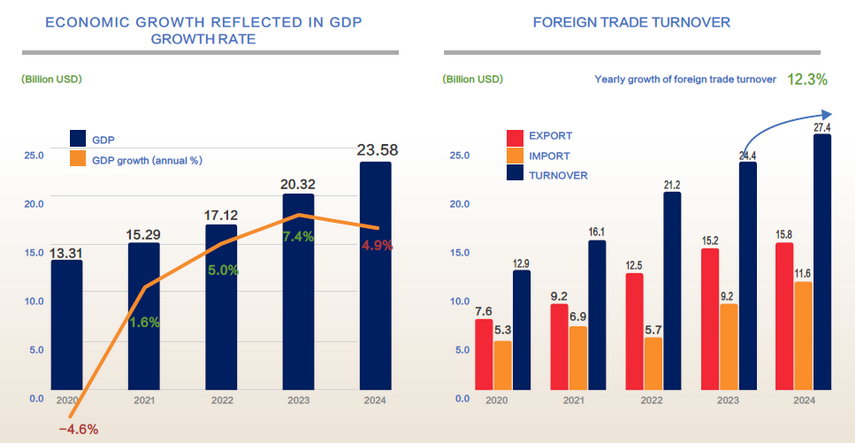
Mongolia's economic outlook is resilient and forward-looking. Following a robust 7.4% growth in 2023, the economy expanded by 4.9% in 2024. Foreign trade reached USD 27.4 billion, driven by rising mineral exports and improved access to global markets. This progress is underpinned by improving credit ratings: S&P Global and Fitch have rated Mongolia B+ with a positive outlook, while Moody’s has maintained a B2 rating with a stable outlook.
Central to Mongolia’s long-term investment strategy are the 14 Mega Projects, totaling USD 12.7 billion in planned investment. These projects aim to modernize infrastructure, reduce import dependency, and enhance industrial capacity. Major initiatives include the Erdeneburen Hydropower Plant, the National Satellite Project, and a state-owned Oil Refinery, all contributing to greater national resilience.
In energy and infrastructure, large-scale renewable energy and water management projects are being prioritized. The Tavan Tolgoi Thermal Power Plant (USD 860 million) and the Egyn Gol Hydropower Plant (USD 1.6 billion) will ensure a stable, clean power supply for both industry and communities. By 2030, Mongolia aims to achieve energy self-sufficiency, and by 2040, transition to clean energy.
Expansions in cross-border railway infrastructure with China will double coal export capacity to 40 million tonnes annually, further strengthening Mongolia’s position as a regional resource hub. Simultaneously, in mining, other international partnerships—such as the Mongolia-France uranium development initiative—are set to generate over USD 1 billion in revenue and create more than 1,000 jobs, laying the groundwork for future nuclear energy development.
Mongolia is actively transforming into a regional center for clean energy, critical minerals, and sustainable infrastructure. Backed by strong economic fundamentals, resource potential, and targeted strategic investments, the country welcomes international partners to participate in its long-term growth trajectory.
VICTWO: How has Chinese investment been doing in Mongolia?
AMBASSADOR: China has long been Mongolia's largest trading partner and one of its top five foreign investors. Chinese investment continues to play a vital role in Mongolia’s economic development, with a strong presence across multiple sectors including mining, infrastructure, energy, agriculture, finance, and tourism. In 2023, direct investment from China reached USD 235.51 million—a significant recovery following the COVID-19 pandemic period.
The mining sector remains a primary focus, with mineral items accounting for about 90% of Mongolia’s exports, much of which are directed to China. Numerous mining projects are ongoing, such as the newly launched fluorite mine at Tsagaankhad in Khentii Province, operated by Jiangxi Construction Investment Company. This facility is designed to process 150,000 tons of ore annually.
Infrastructure is another major area of cooperation. Chinese enterprises have been instrumental in implementing key projects such as the Zamiin-Uud port expansion and the second cross-border railway at Gashuun Sukhait–Gantsmod. These projects are enhancing Mongolia’s transport capacity and regional connectivity, serving as strategic links between the two countries.
Chinese investment is also expanding into new and high-value sectors. As Mongolia accelerates its green development agenda, cooperation in renewable energy—particularly solar and wind—is growing. Investment projects by Chinese firms include modern dairy and meat farms, the establishment of cloud computing centers, the development of e-commerce platforms, and hotel construction. These initiatives reflect a diversification beyond traditional extractive industries.
In 2024, Mongolia’s total foreign trade reached USD 27.4 billion, with a substantial share involving China—underlining the scale of economic interdependence. Notably, the evolving pattern of Chinese investment signals a shift toward sustainable, innovation-driven collaboration. Increasing interest in green technology and digital transformation marks a natural progression in line with Mongolia’s development priorities.
Chinese investment in Mongolia is both deepening and diversifying. With the continued strengthening of the comprehensive strategic partnership, investment flows are expected to grow further, bringing new momentum to bilateral economic cooperation. Chinese enterprises are well-positioned to contribute to Mongolia’s long-term growth by integrating technological expertise, capital, and shared development goals.
VICTWO: Which are the priority sectors of Mongolia attracting foreign investment?
AMBASSADOR: Mongolia offers vast opportunities for foreign investors, particularly in sectors that support sustainable development, economic diversification, and alignment with global transitions such as decarbonization and digitalization. The priority sectors include the following:
Mongolia’s Gobi region ranks among the world’s most favorable sites for solar and wind power. The country has a total estimated renewable energy potential of 3,300 gigawatts—2,200 GW from solar and 1,100 GW from wind—with over 270–300 sunny days annually and consistent high wind speeds.
The government is promoting partnerships to develop utility-scale wind farms, solar parks, and hybrid renewables-plus-storage projects. As part of its New Recovery Policy, 21 renewable energy projects have been initiated to increase the share of renewables in electricity generation, which currently stands at 9.07%. Cross-border power transmission initiatives are also being pursued to export green electricity to neighboring markets, particularly China.
Mining remains the backbone of the Mongolian economy, but with only 3.7% of national territory currently under active mining licenses, significant untapped potential exists. Mongolia holds substantial reserves of copper (61.4 million tonnes), coal (34.6 billion tonnes), gold, fluorspar, uranium, and critical minerals including lithium and rare-earth elements such as neodymium, dysprosium, and terbium—essential for high-tech industries and the global green transition.
The government encourages strategic partnerships in exploration, environmentally responsible extraction, and value-added processing. A focus is placed on downstream activities to reduce dependency on raw material exports and to promote domestic value capture through industrial development.
Agriculture is not only a key sector of the economy—accounting for approximately 10% of GDP and employing nearly 25% of the workforce—but also a cornerstone of Mongolia’s cultural identity. With 89.5% of land classified as agricultural and around 60 million livestock, Mongolia is a major producer of beef, dairy, and wool, including 40% of global cashmere output.
Foreign investment is welcomed in cold-chain logistics, modern meat and dairy processing, greenhouse horticulture, and climate-smart agriculture. Opportunities also exist in precision farming, sustainable livestock management, and organic product certification, aiming to boost productivity and competitiveness in regional export markets.
To unlock its economic potential and reduce transport bottlenecks, Mongolia is implementing 14 large-scale infrastructure projects worth over USD 12.7 billion. These include cross-border railway networks, industrial zones (such as Zamyn-Uud and Sainshand), and regional connectivity initiatives that enhance Mongolia’s role as a transit hub within the China-Mongolia-Russia Economic Corridor.
The country’s young, tech-savvy population and expanding internet infrastructure make it an attractive destination for investment in digital services, AI applications, data centers, fintech, and e-governance platforms. The government also aims to become a regional base for “always-on” digital infrastructure powered by its diversified energy mix, combining baseload coal with growing renewable capacity.
VICTWO: Specifically, what potential or opportunity our two countries have to further cooperate in innovation and technology?
AMBASSADOR: Mongolia and China share vast potential to enhance cooperation in innovation and technology, particularly through the alignment of Mongolia’s digital-transformation agenda and China’s advancements in high-tech industries. In recent years, Mongolia has prioritized the development of its digital economy under its long-term “Vision 2050” policy and the “E-Mongolia” initiative, which aim to improve public-service delivery, expand internet infrastructure, and foster a more transparent and efficient governance ecosystem. These efforts open numerous opportunities for partnership with Chinese enterprises—as well as other international partners—in areas such as digital infrastructure, e-governance solutions, smart-city development, and sector-wide smart, sustainable applications stretching from energy and transportation to agriculture and education.
The rise of green technologies, artificial intelligence, and cloud-based services provides fertile ground for joint research and commercial application. Mongolia’s abundant solar and wind resources can be synergized with China’s expertise in smart-grid technologies, battery-storage systems, and electric mobility to develop scalable clean-energy solutions for regional markets and to enhance efficient grid management.
Innovation in agriculture is also a promising field. Integrating precision-farming tools, satellite-monitoring systems, AI-driven smart-farming platforms, and sustainable livestock technologies can help Mongolia enhance productivity and environmental stewardship. Collaboration in biotechnology, veterinary sciences, and climate-resilient seed development would directly benefit rural livelihoods. Producing and certifying clean, eco-friendly agricultural products—such as organic meat and pesticide-free vegetables—offers significant potential for export cooperation and value-added processing.
Mongolia is keen to learn from advanced economies in building robust digital-governance frameworks, cybersecurity standards, and fintech regulation. Partnerships in these areas would strengthen the resilience and inclusiveness of Mongolia’s digital economy while offering Chinese and other technology providers new market opportunities for secure, scalable solutions.
For example, due to the requirements of green development, the use of thermal coal for energy generation is decreasing. However, new opportunities are emerging to drastically reduce the environmental impact of thermal coal by applying advanced technologies. Taking advantage of this, Mongolian businesses have begun initiating projects to build AI development and data centers adjacent to advanced-technology coal power plants, where the high energy demand of such centers can be met at low cost.
People-to-people exchanges—especially among young scientists, engineers, and entrepreneurs—should be expanded through scholarships, joint research programmes, university partnerships, startup-incubation platforms, and innovation hubs. Such initiatives will serve as catalysts for long-term innovation ecosystems, nurturing a new generation of cooperation between our two nations.
Innovation and technology cooperation is not only possible—it is essential. By combining Mongolia’s development priorities with China’s technological capabilities (and welcoming broader international expertise), our countries can jointly foster innovation-driven growth, advance the green transition, and create shared prosperity across the region.
VICTWO: How does the government of Mongolia take measures to attract new investors?
AMBASSADOR: The Government of Mongolia has been actively implementing bold and comprehensive reforms to attract and retain foreign investment. Among the investors, Mongolia considers China one of its key strategic partners and has taken targeted measures to encourage greater Chinese participation. A major initiative includes the ongoing revision of the Investment Law to reduce administrative burdens, encourage reinvestment, and provide greater legal clarity and protection for both domestic and foreign investors.
Mongolia maintains a liberal investment regime, with the Investment Law of 2013 guaranteeing equal treatment for foreign and domestic investors. Additionally, Mongolia is a party to key international legal instruments such as the Washington Convention on Investment Disputes, the Seoul Convention on Investment Guarantees, and the New York Convention on the enforcement of arbitral awards—providing foreign investors with strong legal certainty and access to international arbitration if needed.
To improve the investment environment, the government has eliminated minimum investment thresholds, simplified visa and land tenure regulations, and introduced tax stabilization certificates that fix key tax rates for up to 18 years in strategic sectors such as mining and infrastructure. Mongolia’s overall tax regime is also highly competitive. Corporate income tax is just 1% for small businesses with annual revenues under USD 87,000, while standard VAT and corporate tax rates remain among the lowest globally.
In 2023, Mongolia established the Investment and Trade Agency (ITA), a dedicated one-stop service center to promote investment opportunities and provide comprehensive support for both local and international investors, including those from China. The agency assists with business registration, labor permits, tax consultation, and facilitates issue resolution across government bodies.
The government is also actively developing Special Economic Zones (SEZs) such as Zamyn-Uud and Sainshand, strategically located along the China-Mongolia-Russia Economic Corridor. These SEZs offer tax incentives, streamlined customs procedures, and are especially attractive to investors in logistics, light industry, and renewable energy.
To further improve the ease of doing business, Mongolia has launched the E-Mongolia and e-Business portals, enabling investors to access government services, register businesses, and apply for permits online. Under the New Revival Policy, Mongolia is expanding public-private partnerships in infrastructure, mining, and green energy—areas where Chinese companies bring substantial experience and capital.
Furthermore, Mongolia has launched the Chinggis Fund, a sovereign wealth fund aimed at responsibly managing resource revenues and ensuring long-term economic stability. In tandem with proactive diplomacy, investment forums, and coordination with China's Belt and Road Initiative, these measures reflect Mongolia’s strong commitment to establishing a transparent, reliable, and forward-looking investment environment.
VICTWO: Last but not the least, business people also travel a lot, could you please introduce to our readers culture and tourism of Mongolia?
AMBASSADOR: Mongolia has a rich history spanning thousands of years, filled with invaluable cultural heritage and traditions. Our customs, art, music, and renowned hospitality form a unique cultural identity that has been preserved through generations.
One of the most iconic aspects of Mongolian culture is our deep connection to nature, virgin and vast steppes, rugged mountains and horses are central themes in traditional Mongolian art and music. A cherished part of our musical heritage is unique "Long song" and throat singing, both of which date back over 800 years. The heart of our nomadic musical tradition is the Morin Khuur, a two stringed horse headed fiddle instrument whose sound reflects the spirit of the Mongolian landscape. Visitors are often captivated by its hauntingly beautiful melodies from the very first day.
Our traditional architecture also stands out. The Ger, known as yurt is the traditional dwelling of Mongolian nomads, which is made from light materials that make it easy for herders to assemble, dismantle and transport. I always recommend that visitors spend at least one summer night in a Ger under the thousands of stars in the vast Mongolian landscape. It’s an unforgettable way to connect with the natural beauty and soul of Mongolia.
Buddhism is the dominant religion in Mongolia but it is deeply influenced by ancient shamanistic practices. For example, in the northern regions, reindeer herding shamanistic communities continue to preserve their unique way of life.
Geographically, Mongolia lies between Russia and China and boasts a vast territory of over 1.5 million square kilometers with a population of just 3.5 million. This contrast has allowed Mongolia to maintain both modern urban centers and untouched natural landscapes, including grasslands, mountains, deserts, lakes, and rivers. As a result, Mongolian tourism is heavily focused on nature and ecological experiences and sense of freedom.
Mongolia is an ideal destination for travelers seeking diverse and unforgettable adventures in one place—whether it's hiking, fishing, camel riding, trophy hunting, eagle hunting, or simply immersing in our rich cultural traditions. And beyond summer, winter tourism is also growing, offering visitors a chance to experience the raw and mystical beauty of Mongolia in a different light.